Showing posts with label erin. Show all posts

Thursday, July 7, 2011

Olympic Coast

I celebrated America's birthday on the Olympic Coast, camped at Toleak point with friends. We had sunny weather, campfires, amazing tide pools, sunsets, and coffee five times a day. Life was good.


rock stars


driftwood of the large tree type on Rialto Beach


Rialto Beach Sunset


Feeling glad that I don't live in Forks


headland trails


tide pools


Toleak sunset


kelp!


chillin' on the beach


Ferry ride back to Seattle

Thursday, June 16, 2011

Amadou and Ami do Senegal

For this post, we will be known as Amadou and Ami...Andrew and Erin being a bit hard to pronounce if you are Senegalese.

The last few weeks of our trip were spent in Senegal visiting our friend Emily and seeing the country. Emily has been working in Ngaraff as a Peace Corps Volunteer for the past 14 months and graciously hosted our trip. And by graciously, I mean it...walking more slowly so that our sand-challenged legs could keep up, put up with our attempts at French while teaching us some basic Wolof, and didn't even get upset when our camel trip was ruined by a bout of violent gastroenteritis (Ami 2: Amadou 0).

Our first day was spent in Dakar, with a trip to Ile De Goree, important historically in the Atlantic slave trade. Although most references show that a very small percentage of slaves from Africa went through Goree, there are still signs of a disturbing past. The most dramatic being the intact holding chambers: boat houses and the Maison de Esclaves.

Boat Houses - Where captured men were kept in conditions similar to what they would encounter on boats to the new world while working on the island. The colonialists did not want to waste money on shipping the weak, so this was done to weed them out.


Dubbed the "Door to nowhere", boats would park on the outside of the Maison de Esclaves in order to load up slaves to take across the Atlantic.


Captured and recaptured several times by the French, Portuguese, Dutch, and British, signs of religious, cultural and architectural differences are seen on the island. Ile de Goree is now a haven for artists, who come to make and sell their paintings, carvings, and jewelry.

View of Dakar from Ile de Goree


cafe Touba stand


Resident Artist's housing on Goree


Next, we headed out down the coast of Senegal, amoung the delta and salt flats, to Palmarin. Joined by another volunteer who had lived in Palmarin for the last three years, we instantly felt at home in the village where we spent time playing in the ocean, building sand castles, taking a pirogue out camping, kayaking, and eating delicious freshly caught fish.

Taking the village kids swimming.


Crossing the lagoon to the beach.


Pirogues (brightly colored wooden boats) stopped to bring in fish outside of Palmarin.


Couldn't this be a Grant's ad? Convieniently comes in a triangular bottle that won't roll around when boating.


Oops...migratory bird island with a dog...birds are not too happy.


Campsite on a sandbar.


Kayaking in the mangroves.


Side trip to check out some Baobobs (which are, by the way, one of my most favorite trees).


Inside the Baobob.


After a great time on the coast we started the day-long journey inland to the Linguere region, to Emily's village. Emily, by the way, is a Wolof speaking badass, who negotiated her way through garages with style and fierce determination. A few sept place and minicar rides later, we landed in Ngaraff.

The people of Ngaraff greeted us with open arms, and lots of greetings:) Ever the gracious hosts, they tolerated my amateur millet pounding skills with a smile, allowed us to share dinner from their bowls in the evenings (even slaughtered a chicken), and were full of encouragement even if we couldn't communicate more than a hello and names in Wolof.

Ngaraff was also getting ready for a huge baptism party. This was to be the party of the year, with crazy amounts of food, women dressed to the nines, and even a generator to power the tunes. We spent the day making greeting rounds, watching the ladies dance-spar, holding cute children, and helping slice things to be cooked. And, I have to say, we brought the house down with our Toubab dancing skills. The crowd went wild when Amadou started his crazy-eyed booty shaking.

The ladies cooking up a huge Baptism feast. It is amazing how much food is generated in a few hours on wood burning fires.


Dressed to the nines, slicing some onions.


kidnapping...


Goat + Chicken + Cat = World Peace


We took a stroll into the bush after the Baptism party. The desert always strikes me as such harsh, hot, and challenging place to live that I often find myself wondering why people call it home, but sometimes it can catch you off guard with its beauty...especially around sunset.

Sunsets in the Djolof


Acacia thorns.


More pretty clouds at sunset.


Our last day in Linguere, we rose early and headed out into the bush on bikes to meet up with other PCVs. What was to be a hour bike ride turned into a 4 hour debacle as we were tested with flat tire after flat tire. Good thing Amadou and Bigue are pros at changing tires. The other volunteers patiently waited on us, and we had a great day in the village, watching a teaching lesson on making mosquito repellant lotion from local plants, and hanging out with a Senegalese-American-Canadian ex-pat who is setting up a homestead in the village of his birth.

Flat tire episode #1.


Somebody's been eating garbage...


Chariot ride back to the bikable trail


Waylaid by Ami's intestines, we spent a day lounging about before heading to St Louis for some beach time, jazz festival time, and debauchery. Our last few hours back in the capitol were spent shopping for and cooking a decidedly delicious meal of lasagna, broccoli, and ice cream.

Not wanting to leave, we trudged back to the airport. I felt extremely happy that I had been able to share this experience with such great people. We had the trip of a lifetime, and have Emily to thank for showing us the country, helping us communicate, and sharing her beautiful personality. I have already started to plan a trip back.

Sunday, May 22, 2011

Marrakech

My apologies up front. This may read like a PBS special on Morocco, but so be it.

There is probably no better way to ensure culture shock (first cliché) than spending a day in the air conditioning, shopping, napping, getting hair cuts, watching Spanish television, taking multiple showers, and staying up all night, then flying at 400 AM to a bustling, crazy, hot, desert Muslim country. But, we made it through customs, sleepily payed too many Dirhams for a taxi to town, and were pawned off without realizing the consequences to a guy who took us through the winding, covered roads of souks to our hostel. We regrouped, napped, then hit the streets.

The medina, or walled old town, of Marrakesh centers around a square, the Djeema el Fna. From there, stalls of covered souks (small markets) extend in all directions. Most of our days in Marakesh were spent repeatedly getting lost in the souks. Somehow we would find ourselves back to the square, then promptly get lost again.


Medina walls

The souks are dream-worthy, constantly dancing with your senses. Usually the smells or the sounds give away what is around the next corner. There are tanneries where you can buy your leather slippers or bags. There herbal markets with piles of brightly colored spices, mystery eye drops for your eye problems, siwak sticks for cleaning your teeth, goopy, brown olive oil based soap.

There are meat markets where they will butcher the animal in front of your eyes. There are dried fruit stands where you can taste several different types of dates and figs before you decide on the right ones. There are mint carts where you buy your mint fresh daily for the ubiquitous Moroccan "whiskey" - sweetened mint tea. You can watch the tile guys carve intricate patterns, watch the woodworkers cut and fit pieces of a door, watch the dyers hang up their yarn to dry in the wind and sun. There are orange juice stands where you can enjoy fresh squeezed OJ any time of the day. There is a market for any desire. To a newbie, the crowded stalls can be a bit overwhelming, but the locals have a daily walk where they gather all of their needs.


stalls of dried fruits and nuts

Then there's the Djeema el Fna. The Djeema is always a happening place, but at night the general population of tourists and Moroccans alike descend upon the square for night time display. In late afternoon carts pulled by mules bring in men dressed in white coats who set up covered tents, makeshift displays, tables, chairs, and fire up the grill. Then begins the strange courting ritual of words, prices, foods.

"Madame, Monsieur. Scottish? English? Francais? Take a look, see if you like. Only freshest. Stall one-seven, send you to heaven."

Kebabs, snails, lamb soup, type-I spice cake (ask sometime about type-II spice cake), cous cous, spice tea can be sampled as you walk from tent to tent. At some point it becomes dark enough to need lights, and the gas lamps flicker on.


after dinner at the Djeema


delicious type-I spice cake and spice tea for dessert

Further out around the periphery people pander the crowds for donations. Cross dressing belly dancers shake their stuff with their palms out. Snake charmers spend time pissing off their cobras, then playing tunes for a few dirham per picture. Nightly concerts start up on the stage, and kids scramble to the top of trees to get the best view. Old men crowd around tents where stories are told in the Berber tongue. Women try their hardest to make sure that no tourist leaves without their hands covered with henna tattoos. Demonstrations occur, music is everywhere, and there is still orange juice.


the Djeema el Fna at night

Needless to say, most of our time was spent exploring these sights, tastes, sounds, and smells. We also spent time trying to sneakily feed the kittens that would gather around our feet. A medina kitten would definitely make a well adjusted cat...if only bringing one home wasn't so hard.


Medina cats

Wednesday, May 11, 2011

Le Mt Ventoux

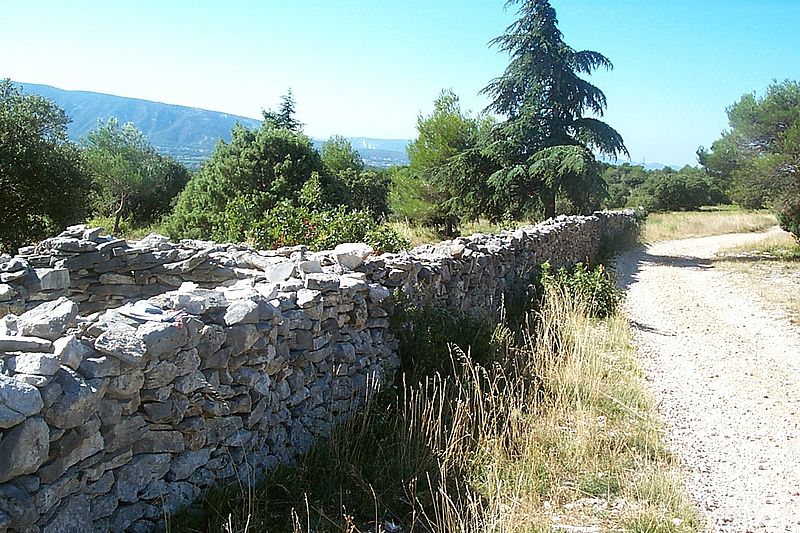
200m: Leave from Jouncas, head up the valley towards and past Murs Coll, past the wall that gives Mur it's name. The wall extends the length of the Provencal countryside. It was erected from dry stone by citizens after a governmental decree in reaction to the bubonic plague overwhelming the streets of Marsailles. It was coined the mur de la peste and was guarded along its length 24 hours a day by sentinels. To be able to cross, one must have a clean bill of health in hand. A lasting representation of panic surrounding the outbreak.


(Picture egregiously stolen from wikipedia)

900 m: Views of Mt Ventoux begin to show in the distance as we reach the peak of our climb for the day and head down to Sault.


810 m: We stop for eau potable and watch goats cross the road at a busy rural intersection.


740 m: The road switchbacks up 100 meters and dumps us into Sault, perched airily above the valley. Feels like finishing a Tour de France stage. We enjoy beers and look out at the valley as the sun sets.


680 m: We drop to the valley floor before starting our climb to the top of Ventoux. The road is gently graded and in the trees at first. Scattered Tour graffiti spray painted on the road makes for interesting reading as we climb.

1440 m: We triumphantly emerge above tree line. After a picnic break we begin the exposed climb over white, tumbling talus, which gives the mountain its snow-covered appearance from far away. The climb steepens to over 10% grade and the temperature begins to drop slightly as the wind picks up. I am passed seven times on the way to the summit by others in race kit. He who finishes last still finishes, right?  Andrew passes one man dressed in head to toe spandex and on an ultralight bike...and then won't quit talking about how he now owns this man's soul forever.


1850 m: Only one kilometer to go, the observatory on top of the mountain gets closer in view.


1912 m: Summit time! Excited to be done with the climb, and feeling self-accomplished for completing an HC climb with full touring gear. Battered by the wind, we do not stay long to revel in our accomplishment.


1700 m: Rim-boiling steep, airy descent with amazing views to the north.


440 m: We arrive at Maulacene, among many old men playing bocce ball, a strange beauty pageant, and a noisy tractor demonstration. We work on consuming as many calories as we burnt during the day in pizza and salad.